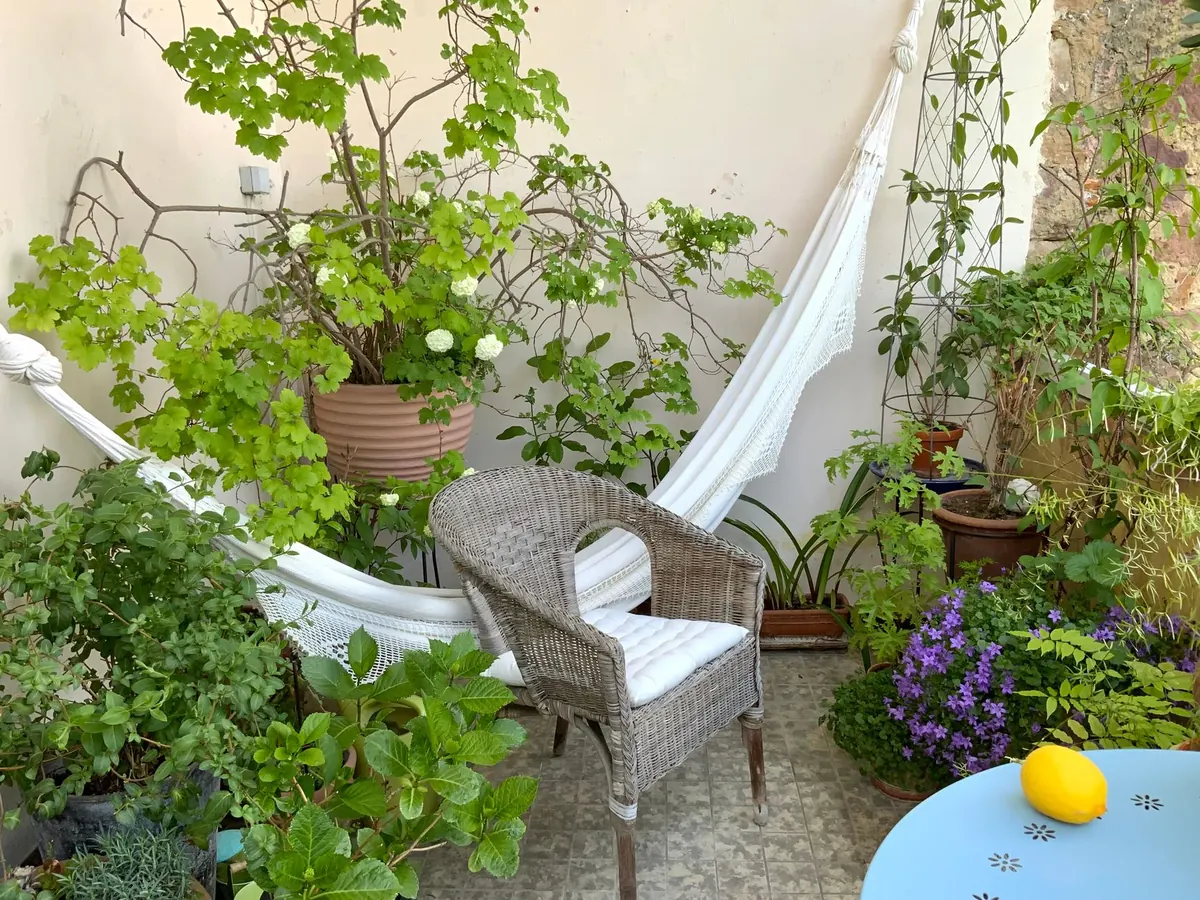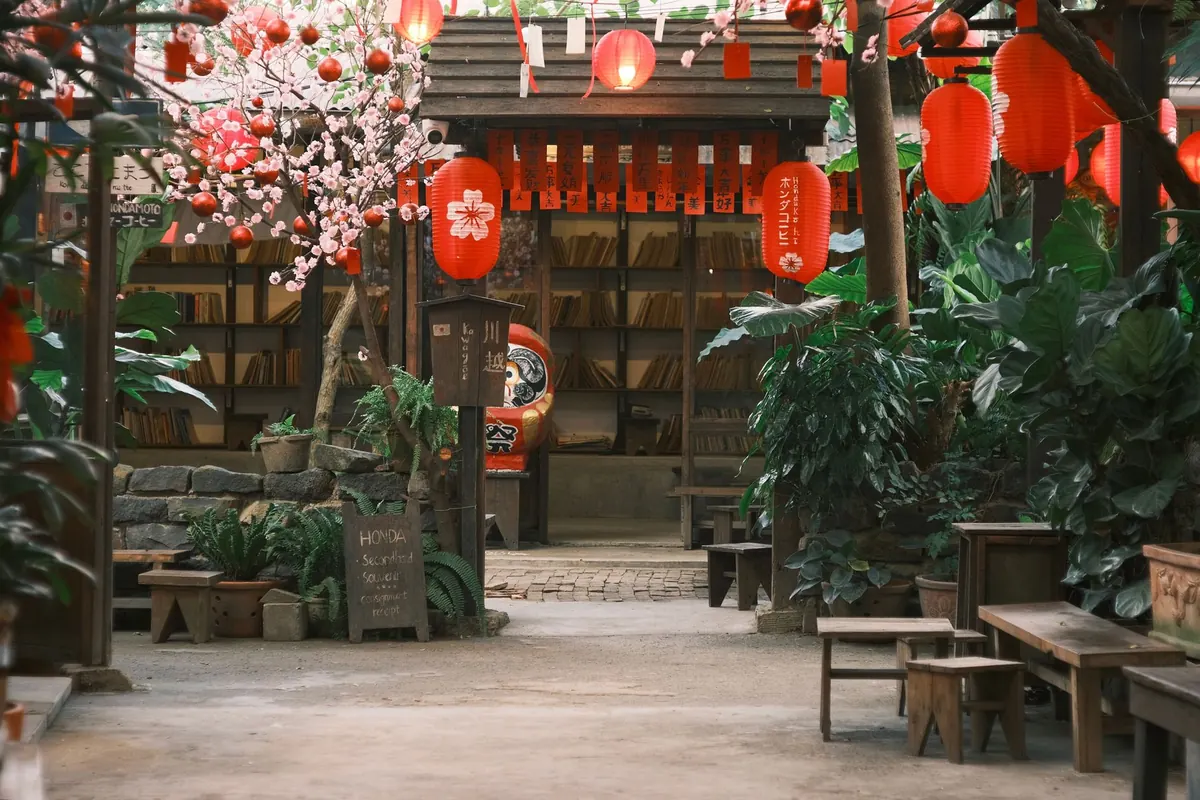
Most Japanese gardens shown in British magazines sit in acres of gravel beside big houses, which makes the style look like it needs room. It doesn't. The gardens this tradition grew out of were often tiny: narrow plots pressed together, walled on three sides, with the house closing the fourth. That is roughly a courtyard behind a terrace. You are not shrinking the idea to fit. You are working close to the original brief.
Why enclosure does most of the work
These gardens are meant to feel like a complete world, and a courtyard is already most of the way there. What matters is that the eye is not pulled out of it — towards a wheelie bin, a satellite dish, next door's trampoline.
Sort the boundary before you buy a plant. Dark, recessive colours make walls recede and planting step forward: charcoal-stained timber, weathered cedar, black-painted slats. Close-board panels around 1.8m high, topped with a bamboo screen for extra height without extra weight, work well. If you want to go above two metres, or the boundary faces a highway, check the permitted development rules with your local planning authority, as permission is often needed.
The idea worth stealing here is miegakure — hide and reveal. If the whole garden is visible from the back door, it reads as one small rectangle. Put something in the way: a screen, a gate, a single well-placed shrub, or a short fence projecting from a wall. Part of the space then stays hidden until you walk into it, and that changes how big it feels.
Gravel, stone and the floor of the garden
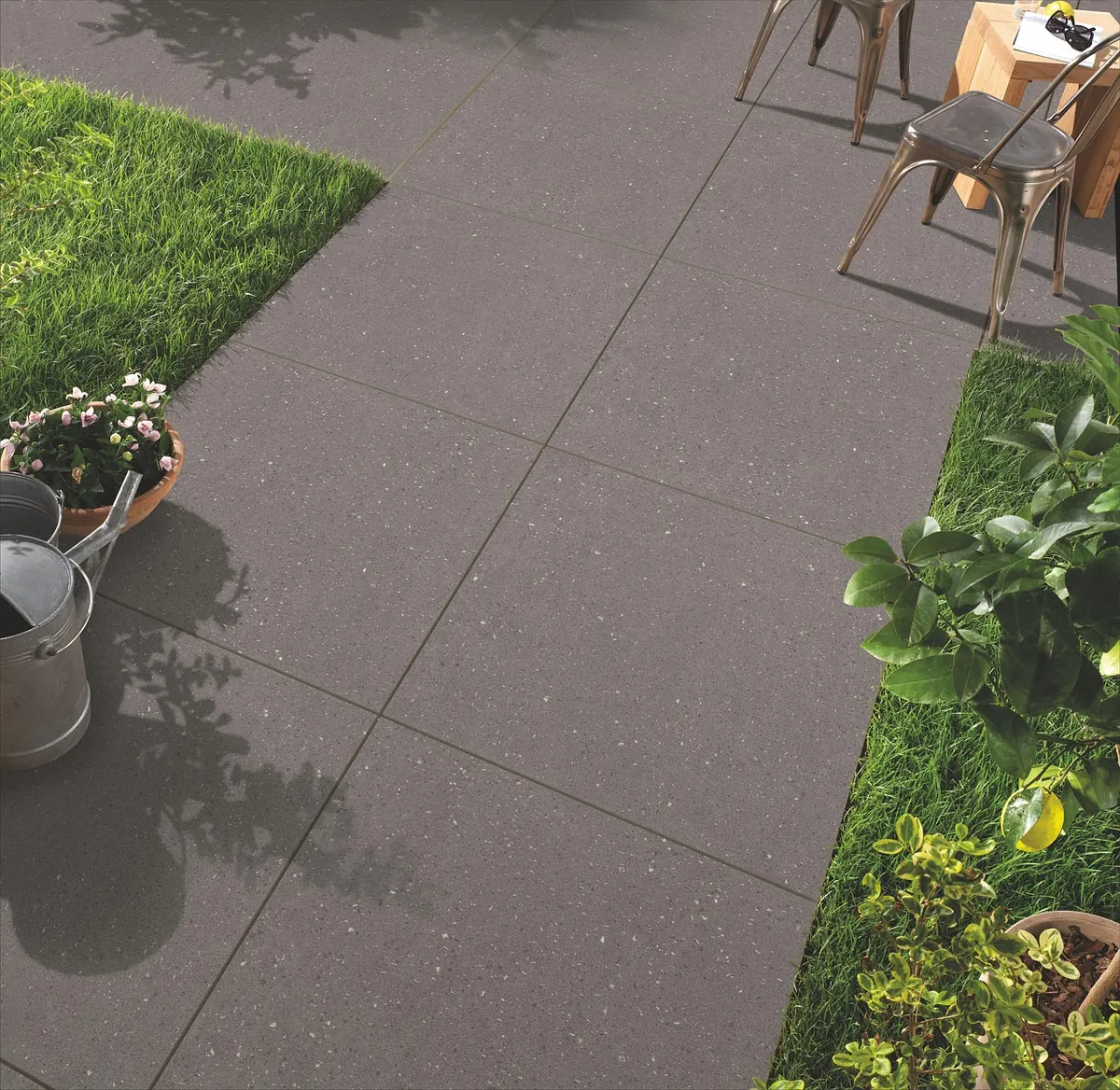
In a small courtyard the floor does more work than the plants. One continuous surface, with a stone path running through it, lets the eye travel. Travel reads as distance. Mixed paving and patchy lawn chop the same space into pieces.
For a raked area, use 10–20mm gravel at about 50mm deep over a weed membrane and a compacted sub-base. Hold it back from the soil with a steel or stone edge, and keep it below the damp course; gravel banked up against a house wall is a good way to create damp problems. Levels should fall gently away from the building. If the courtyard has no natural drainage, plan a channel or soakaway before you order anything.
Raking gets overthought. Straight lines drawn parallel to wherever you usually sit are calm and quick to keep. Circles around a single upright stone suggest water without any plumbing. Two or three stones are plenty. A courtyard crowded with lanterns, bridges and ornaments stops looking like a garden and starts looking like a display of purchases.
Moss, ferns and the damp British advantage
Moss is why a British courtyard can look convincing within a couple of years. It wants what we already have: mild damp air, shade or dappled light, low soil fertility, firm ground and no competition. What kills it is sun, long dry spells, and a blanket of autumn leaves left lying across it all winter.
Clear weeds and grass, firm the soil, and water it through dry weeks. Lifting patches of moss from elsewhere in the garden and pressing them onto damp bare soil works as well as anything else; the old buttermilk recipes are folklore and unreliable. Leave the moss in paving joints alone. It is a feature, not a failure — just watch steps and slopes, which turn slippery.
If your courtyard is a sun trap, do not fight it. Use gravel and ferns instead: Dryopteris erythrosora, hart's tongue fern and Japanese painted fern all cope well, provided their roots are in shade and the soil stays reasonably damp. Hostas earn their place in a large pot, where slugs are easier to manage.
Planting with restraint
Small gardens look better with three or four plants repeated than with thirty and a colour scheme. Choose a few shapes — a rounded evergreen, an arching grass, an upright accent, a mossy ground layer — and repeat them. Everything should earn its place in January as well as June.
- Japanese maple (Acer palmatum) — the classic accent. Shelter it from wind and late frost, and keep it in a pot in colder areas.
- Japanese holly (Ilex crenata) or yew — dependable evergreen structure, and a better bet than box, which has had a hard few years.
- Mountain pine (Pinus mugo) — for cloud pruning. Pinch out the new candles in late spring to keep it dense.
- Hakonechloa — Japanese forest grass, which softens the base of stones and pots.
- Ferns and moss — the ground layer that ties everything together.
Cloud-pruned trees take work: one is a pleasure, three becomes a summer job. A well-shaped shrub in a large bowl-shaped pot does much the same thing with far less effort.
Borrowed scenery when the good tree is next door
Shakkei, borrowed scenery, sounds mystical and is mostly common sense. Your garden does not stop at the wall. A neighbour's birch, a church tower, a roofline and a great deal of sky are already part of the view. The trick is to frame them so they look deliberate rather than accidental.
Find one thing beyond the boundary worth having, then make an opening that shows it and little else. A gap between the end of a fence and a shrub, a square cut into a screen, or a lower stretch of boundary with sky above all do the job. If the good tree belongs to next door, do not screen it off; plant beneath the sightline so you see its crown.
Treat this as a bonus rather than a backbone, since neighbours move and trees come down. Borrow what nobody can take away, too: wind moving through bamboo or grass, rain on a stone basin, birds. A still bowl of water, kept clean, reflects the sky and does more for a courtyard than a fountain.
Getting it built: a sensible order of work
Courtyards are small and visible from the house, so a phased build is fine but a messy one is not. Work in this order.
- Boundaries and services. Fence or wall, any cable or water supply, and a drainage plan. Outdoor electrics for pumps or lighting should be fitted by a qualified electrician.
- Levels and floor. Decide where gravel goes, where stone goes, and where you will sit. Keep surfaces below the damp course.
- Hard elements. Sub-base, membrane, gravel, edging, stepping stones, and one focal point — a stone, a basin, a single pine.
- Plant in autumn. Structure first, then ferns and moss, so roots settle before spring.
- Then wait. Resist filling gaps with bedding plants in the first spring. Two or three years is normal before the planting looks established.
Upkeep after that is modest and seasonal: tidy the gravel, keep leaves off the moss in late autumn, prune in late spring with a light trim in summer, and lift pots onto feet for winter so they are not sitting in water.
One last check before you start. If the courtyard is rented, or the building is listed or in a conservation area, get permission before you change boundaries or hard surfaces.